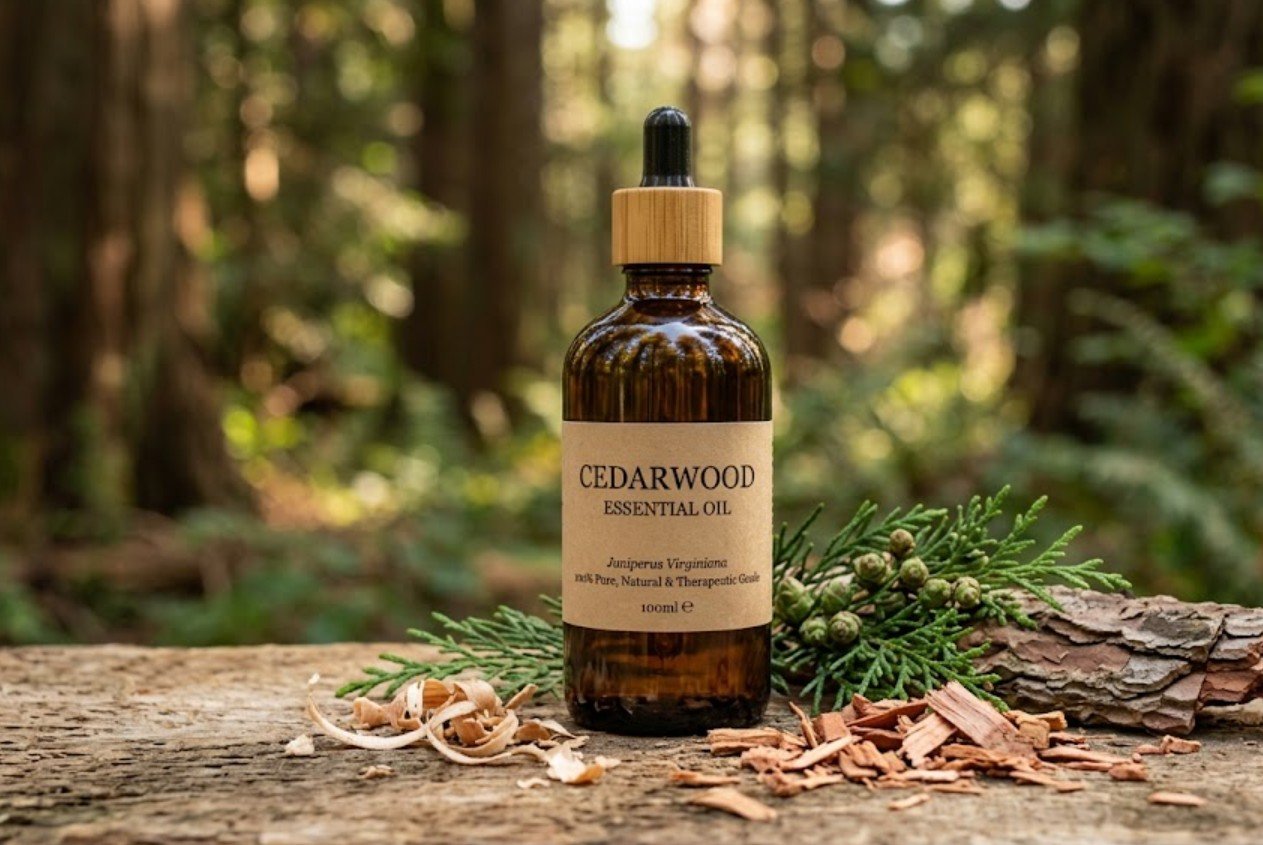
Cedarwood essential oil is a concentrated aromatic oil known for its warm, woody, and slightly smoky scent. It is commonly used in aromatherapy, perfumes, soaps, hair-care products, massage oils, candles, and household fragrance blends. Although the name suggests a single product, cedarwood oils can come from different tree species, so their scent and chemical composition may vary.
Many people use cedarwood essential oil for relaxation, scalp care, skin care, or natural fragrance. It is also included in some insect-repellent products. However, not every popular claim is supported by strong clinical research. The most reliable approach is to view it as a fragrant essential oil with several practical uses rather than as a proven treatment for medical conditions.
What Is Cedarwood Essential Oil?
Cedarwood essential oil is usually produced through steam distillation of wood, bark, sawdust, or other aromatic parts of cedar and cedar-like trees. Common commercial varieties include Atlas cedarwood, Virginia cedarwood, Texas cedarwood, and Chinese cedarwood. These oils may come from different botanical groups, including Cedrus, Juniperus, and Cupressus species.
Because the source plants differ, one bottle may smell softer and sweeter while another may have a sharper, smokier, or drier aroma. The chemical profile can also vary. Compounds such as cedrol, cedrene, thujopsene, and widdrol are often associated with cedarwood oils and help create their characteristic fragrance.
Cedarwood essential oil is typically pale yellow, golden, or amber in colour. It is highly concentrated and should not be confused with a carrier oil. A carrier oil, such as jojoba or sweet almond oil, is a fatty oil used to dilute essential oils before applying them to the skin.
Potential Benefits and Scientific Evidence
Cedarwood essential oil is often promoted for relaxation, sleep, hair growth, acne, scalp health, and emotional balance. Some of these uses are based on traditional practice, fragrance preference, or small studies rather than large, high-quality clinical trials.
Aromatherapy is one of its most common uses. The woody aroma may help create a calm atmosphere, especially when blended with lavender, frankincense, bergamot, or sandalwood. Some people find the scent grounding or comforting before sleep. However, responses to fragrance are subjective, and cedarwood should not be considered a treatment for insomnia, anxiety, or depression.
Hair and scalp care is another popular area. Cedarwood oil is frequently added to shampoos, beard oils, and scalp serums. It may help improve the scent of a formula and support a regular scalp-massage routine. Claims that it directly stimulates hair growth are less certain. A small older study involving several essential oils is often cited, but the formula contained multiple oils, so it does not prove that cedarwood alone was responsible for the result.
For skin care, cedarwood is sometimes described as cleansing or balancing. It may be included in products for oily skin because of its dry, woody character. Still, there is not enough evidence to say that it treats acne, eczema, fungal infections, or other skin diseases. It should be used as a cosmetic ingredient rather than a replacement for medical care.
Cedarwood oil also has a history of use in insect-repellent products. Certain formulations are designed to deter moths, fleas, or other pests. Product labelling matters here. A cosmetic essential oil should not automatically be treated as a registered insect repellent, and homemade mixtures may not provide reliable protection.
Common Uses for Hair, Skin, and Aromatherapy
One of the simplest ways to use cedarwood essential oil is in a diffuser. A few drops can create a warm, forest-like scent in a room. It combines well with citrus oils for a fresher blend or with floral and resinous oils for a deeper fragrance.
For hair care, it can be added in very small amounts to a properly formulated scalp oil, shampoo, or conditioner. A diluted scalp massage may feel relaxing and can help distribute a carrier oil through the hair and scalp. The benefit may come mainly from the massage, conditioning oils, and regular care routine rather than from cedarwood itself.
In beard oils, cedarwood is especially popular because its scent is often associated with traditional masculine fragrances. It blends well with jojoba, argan, or sweet almond oil. A low concentration is usually enough because the aroma can become strong quickly.
For skin, cedarwood may be used in diluted body oils, soaps, or fragranced lotions. It is better suited to small cosmetic amounts than heavy direct application. People with sensitive or reactive skin should be particularly cautious because essential oils can cause irritation even when they are marketed as natural.
Cedarwood is also used in perfumes, candles, room sprays, linen blends, and closet fresheners. Its woody base note helps longer-lasting fragrances feel warmer and more grounded. It is often paired with vetiver, patchouli, amber, vanilla, rose, or citrus.
A natural contextual resource for understanding broader essential-oil use is the National Center for Complementary and Integrative Health overview of aromatherapy, which explains how essential oils are commonly used and why evidence varies between products and claims.
How to Use Cedarwood Essential Oil Safely
Essential oils are concentrated, so dilution is important. For routine adult body use, a low concentration is generally more appropriate than applying the oil directly. A common cosmetic range is around 1% to 2%, although the correct amount depends on the product, the body area, and the user’s sensitivity.
For a simple 1% dilution, approximately one drop of essential oil can be added to one teaspoon of carrier oil. Drop sizes vary, so this is only an estimate. Larger batches should be measured carefully rather than mixed by guesswork.
Suitable carrier oils include:
- Jojoba oil
- Sweet almond oil
- Grapeseed oil
- Fractionated coconut oil
- Argan oil
Before broader use, apply a small diluted amount to a limited patch of skin and observe the area for irritation. A patch test does not guarantee that a reaction will never occur, but it may help identify immediate sensitivity.
For diffuser use, follow the manufacturer’s instructions. More oil does not necessarily produce a better result. Strong diffusion can cause headaches, nausea, respiratory discomfort, or irritation in sensitive individuals.
Do not ingest cedarwood essential oil. Internal use carries risks and should not be attempted without qualified medical guidance. Essential oils should also be kept away from the eyes, inner ears, and other sensitive areas.
Pregnant or breastfeeding individuals, children, people with asthma, and those with chronic medical conditions should seek professional advice before using essential oils regularly. Pet owners should also use caution because animals can respond differently to concentrated fragrance compounds.
Side Effects, Risks, and Buying Considerations
The most common side effects are skin irritation, redness, itching, rash, or burning. These problems are more likely when the oil is undiluted, used too frequently, or applied to damaged skin. Stop use immediately if discomfort develops.
Fragrance exposure may also trigger headaches, dizziness, nausea, or breathing discomfort in some people. A diffuser should be used in a ventilated area rather than continuously in a closed room.
Natural does not mean risk-free. Essential oils contain active aromatic compounds and can cause allergic contact dermatitis. Old or oxidized oil may be more irritating, so bottles should be stored tightly closed, away from heat and direct sunlight.
When buying cedarwood essential oil, check the botanical name rather than relying only on the words “cedarwood oil.” A quality label should ideally include:
- Botanical species
- Plant part used
- Extraction method
- Country of origin
- Batch or lot number
- Safety instructions
- Expiry or best-before guidance
The oil should be sold in a dark glass bottle to reduce light exposure. Avoid products that make unrealistic medical promises such as curing hair loss, treating anxiety, eliminating infections, or healing chronic skin disease.
Price alone does not confirm quality. Some cedarwood varieties are naturally less expensive than rare essential oils. Clear labelling, traceability, storage, and responsible claims are more useful indicators than luxury packaging.
Conclusion
Cedarwood essential oil is a versatile aromatic oil used in fragrance, hair care, beard oils, skin products, diffusers, soaps, and some insect-repellent applications. Its main appeal is its warm woody scent and its ability to blend easily with floral, citrus, resinous, and earthy oils.
Some people find it calming or useful in a scalp-care routine, but strong claims about hair growth, acne treatment, sleep, or medical benefits remain insufficiently proven. The safest approach is to use it in low concentrations, follow product instructions, and treat it as a cosmetic or aromatic ingredient rather than a medicine.
FAQs
Is cedarwood essential oil good for hair growth?
Evidence is limited. It may be used in scalp-care products, but there is not enough strong research to prove that cedarwood oil alone promotes hair growth.
Can cedarwood essential oil be applied directly to skin?
It is safer to dilute it with a carrier oil first. Direct application may cause irritation, redness, or an allergic reaction.
Does cedarwood essential oil help with sleep?
Some people find its scent relaxing, but it is not a proven treatment for insomnia. Individual responses to aromatherapy vary.
Is cedarwood essential oil safe around pets?
Caution is recommended. Some animals are sensitive to essential oils, especially in poorly ventilated spaces. Consult a veterinarian before regular use around pets.